A tap has a tendancy to tear stainless, and IMHO that is where the problems begin. For a specific tap recommendation for your application, please consult your tap supplier. If going right through you wont need the plug but using the two different tapers mkes much lighter work of it and hugely reduces the risk of breaking a tap. Any oil is ok, proper stainless cutting fluid is best but expensive for one off job. ------------------------------------------------. As long as you are throwing a chip keep the pressure on. If you need to do it manually, you can try drilling with a 13/64" or #6 drill to slightly oversize the hole and reduce the load. For a better view of the SAE and metric thread available, download a copy of the handy Tap/Drill Chart at the end of this article. 2021 Inline Design, Cable Railing: A Complete Step-by-Step Guide, Deck Railing: 19 Key Points You Want to Know, Stair Railing: 24 Key Points to Boost Your Home's Design, Stair Railing Ideas: How to Create a New Focal Point. The blind holes on the back carry the weight but they have about 8mm of engaged thread so there's a little wiggle room there. parafin is good for alumin not stainless. It has an effect on how the tap is guided when it enters the hole. Ideally use starting and finishing taps . Thread closed temporarily for Moderation Thread re-opened after a cleanup. For the most part, the various metric standards agree on a dimensional standard and a common coarse thread pitch, which is the most widely used. In this case three thousand words. Sorry if you know this but Are you just trying to screw the tap in or are you doing the normal half turn in and a quarter turn out? This can cause some confusion and one should really have a thread gauge if they are in doubt. Hand Taps and Proper Threading Techniques. You must log in or register to reply here. Drill press is the way to go for sure. I used lots of lubricant and it worked like a charm without breakage. When there are more threads in the chamfer length or lead the torque is reduced, producing the thread is much easier, and the life of the tap will be increased. Keep up the great work guys !! by mechanic959 Tue Jun 07, 2005 3:23 am, Post It just flies right out. Just some thoughts on a frustrating job. There are usually 3 or four cutting sections separated by a groove, called the flute, between them. What type of tap did you use? Once the first full teeth begin cutting, the metal being removed may be a long strip, called a swarf, or chips. Round dies are usually the choice for cutting new threads whereas hex die nuts are commonly used as a chaser to repair existing threads. I agree with what Steve says plus I use Moly dee it is a high sulfur lube that works wonders on stainless. These taps are mostly used in thin walled parts or for holes interrupted by cross holes or longitudinal slots. I'll try my hardest to remember to look at the bottle for you, I rarely hand tap stainless (303, for the record. Even at 50% the threads are still strong enough in steel that the head will shear off before the threads strip out. I have an assembly Im making and one of the parts are these small studs of stainless steel. Also try a spiral flute (not spiral point) tap. For a better experience, please enable JavaScript in your browser before proceeding. decent tapping fluid, this is not a place to cheese out. Although not as easy to start as a taper tap, they can be used to start a thread. Cheap taps are commonly made from Carbon Steel. Your success depends on drilling. It is extremely important that these cuttings be broken up to prevent jamming and breaking the tap. Slow down the rpms and use a heavy feed. 1/4-20 for example, requires a #7 drill bit for proper threading. Thanks Steve. Chip clearing is even more important here and the tap should be well lubricated and extracted during the threading process to keep the hole, threads and tap clean and free of debris and chips. With 3.5 to 5 Threads Chamfer Length or Lead. In some cases the lead of the tap is reduced to as little as 1.5 threads. It is always preferable to use a proper T-handle for taps rather than a wrench or locking pliers. External threads, such as for bolts and studs, are made by using a tool called a DIE, which is applied to a specific diameter of rod for the size and pitch of the threads you want to cut. In the shop; a Jet 8x36 vert mill, Jet 13x40 lathe. 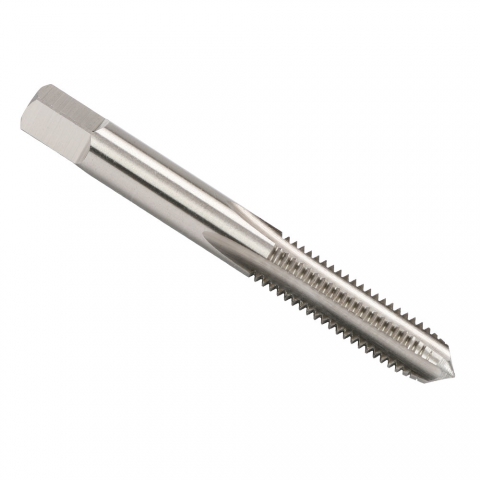 We apologize for any inconvenience, the Drill Size Chart is now available for download. However, I don't have any and only use engine oil. Don't be tempted to open up a hole in stainless in very small stages. so sharp is rule for the day. So, I've had good luck with the msc brand accupro for powered tapping in the machine, and handtapping. Is there an industry standard for perpendicularity when hand tapping, or a suggested degree of angle for +/-. stainless is prone to work hardening so if you start with a work hardened hole from drilling your going to have trouble hole size is critical a few thou either way makes a difference so hole finish makes a difference . Stainless steel does not harden through heating, but due to very localised distortion of the metal caused by rubbing rather than cutting from the tool. In blind holes where there is not enough room to drill deep enough for a tap with a longer lead, taps with short leads are used. Use a spiral point (not spiral flute) tap, maybe called a gun tap in the catalog.
  Any advice is greatly appreciated. Use HSS taps in preference to carbon steel (Bog standard) and a good brand of cutting oil or grease made by Rocal. Internal threading is done by using a tool called a TAP in a hole drilled to a specific diameter for the thread size and pitch you want to cut. It's 3/16 304 stainless steel rod and i drilled it out with a 7/64 bit . we used them in high chrome tool steel like D-2. There's a 6mm stainless steel plate bolted over the top & I need to tap this. This rolling action displaces the metal of the blank, forming threads. True, also I found a very easy way to get small broken taps out is by hole punching it about 20 times. by Andre Tue Jun 07, 2005 1:00 pm, Post I am NOT an engineer, but have started a development project for medical devices in Ethiopia. Position handrail on saddles or handrail brackets, Mark your drilling points with a pen using the posts and saddles as a template, Remove saddles from post or handrail bracket (in the case it is removable), Center punch your marked drilling points; this will keep the drill bit from skidding, Apply cutting oil; drill the tube at your marked points using Cobalt drill bits. They work best in shallow depth through holes and in materials that produce short chips. They work much better in stainless steel, but perhaps a bit extravagant for a "one-off". It will give you all the threading information you need and includes an SAE-Metric-Decimal equivalent chart. Someone else mentioned using grease instead of oil. I didnt know that using too small of a hole could break your tap. Self-Reversing Manual Tapping Attachments, Visit OMG North America for Angle Heads, Spindle Speeders and Multi-Spindle Heads. I assume what you have is harder) but I won't tap stainless at all without "the green shit". Press question mark to learn the rest of the keyboard shortcuts. In order for taps and dies to cut, they must be harder than the materials they are cutting. Using a T-Handle keeps the force applied over the center of the tap or die, maintaining proper symmetry. Take your time, go slow, this is truly one of those situations where haste could indeed make waste of several hours of your time and possibly, your wallet. Have you tried to over drill for a lower percent thread. Using the correct hole size is important on two points. It stinks but for tapping stainless you have a hard time beating it. Now retired, persuing boats, trains, and broken relics. Metric thread pitches are expressed as the distance between threads, so a thread pitch of 1.0mm would mean it was 1.0mm between the tops of two adjacent threads. Drilling the hole a little bigger as the last poster suggested will also help. A lot of tapping problems come from the hole your tapping. According to these instructions you only make one pass at making the thread. Same with tapping, the normal advice of reversing to break the chip and going slow is the worse thing on stainless. Try making the engine in a different way !! It hardens and changes the quality of the metal, and if it throws the tap off line, BOING, yur dun! Fadal Turn, Fadal Vmc 15, Prototrak 16 x 30 Cnc Lathe, Pratt and Whitney 16 x 54 lathe, Pratt and Whitney Vertical Shaper, G & E 16" Shaper, B & O Electric turret lathe, 36" Doall band saw. The greater helix angle provides good transport of chips back out o the hole. The chips are curled up to prevent logging in the flutes. Tap Manufacturers offer their own unique geometries for specific materials and applications. by steamin10 Tue Jun 07, 2005 9:49 am, Post The latter two work, in a pinch, but you must be careful because turning the tap from one side only can put asymmetrical stress on the tap, causing it to go off center, or break.
  Try using a taper tap that has as long of a taper as possible. It makes sense youd be putting a lot of pressure on your materials. Well, here you go! Spiral Flutes With 3.5 to 5 Threads Chamfer Length. The vast majority of tap breakage can be avoided by making sure you break the chips, and the smaller the tap, the more important it is. Left Hand Spiral Fluted Tap
Afterwards I placed it in a drill press, with my piece placed in the vice. !Best oil for tapping stainless.. One picture is better than a thousand words. JavaScript is disabled. What would you recommend? For a better experience, please enable JavaScript in your browser before proceeding. Keith, From the land of Oz, although not the Wizard of. I believe your 420 grade is a precipitation hardening steel. The actual cutting of the thread is done by the lead of the tap. What stainless? I also found that it makes it easier to clean the thread a little more often i.e. by motorworks Tue Jun 07, 2005 6:13 pm, Post The oldest of these uses Imperial fractional measurement and is often referred to as SAE which stands for The Society Of Automotive Engineers. I've had a steep learning curve machining these parts so I'm already acquainted with the stuff work hardening but with a lot of trial and error the right cutting tools at the right speed with plenty of cooling fluid and it can machine quite well, it's just quite a small window and outside of it it's all smoke and noise and blunt bits. With 40 Degrees to 50 Degrees Spiral Flutes. The #2 tap is known as a "plug" tap. Relief Angle In The Lead Of A Tap
They worked OK even as hand taps but I would always use a drill press or lathe if possible. Fine pitch metric fasteners do exist and often come in more than one fine thread pitch some as many as 4 or 5! [For round tube only: you will need a self-centering drill press jig, Tap the tube using the hand-powered drill (at low speed) and the corresponding tap, Repeat steps 4-7 to all your marked points. Looks like Moly Dee is only available in the US, I'm in the UK. What 1/4-20 tap would you recommend for 1/4 thick stainless steel plate . The other, more recently adopted standard is known generally as metric but actually encompasses a number of different standards, from different countries. 1/2 turn in and 1 turn out will remove tap! Sure, you can buy a complete tap and die set, but do you really need it? Sorry o, if mistakenly the tap got broken, how can it be removed. Let's stay on the technical topic please folks. Oh, and coarse and fine threads are always different drill sizes. We will probably buy a taping head for the press drill . I have fixed the issue and it is available for download at your convenience. I'm going to buy a bigger drill. I went got a replacement , under warranty [img]/ubb/images/graemlins/wink.gif"%20alt="[/img] . They push the chips down and out the bottom so you don't stop and reverse - just keep going. Taps and dies come in various configurations and materials, the most common being High Speed Steel (HSS) for softer materials and Cobalt for hard materials like stainless steel. Special cutters combined with the motions of the machine generate very accurate threads rapidly . Threads produced using taps and dies, whether by hand or machine, are what is referred to as cut threads. I dont bother to hand tap stainless anymore, I use the drill press and vice, I use the feed lever to encourage starting STRAIGHT, and a pin in the chuck key holes to feed in, and reverse, STRAIGHT. The right drilling and cutting fluid is tepmatic or similar. Not a big fan of hand tapping with form taps. Not sure how widespread that usage is, but Ill go with it. Or can you use the tap like you are suppose to, recutting and cleaning the bent and damaged threads. 63% threads is a lot for stainless. I now only use this for tapping and parting off. The stainless type is 420. If the hole is too small, it will cause the tap to bind and quite possibly break trying to cut too much material. We are incorporating tap and die to Peek parts for manufacturing the neck of a Bag Valve Mask device. Fools talk because they have to say something. The threads found on most mass produced externally threaded products such as bolts, studs and screws, are formed by a process known as thread rolling. The speed of cutting is important because the hardening process is a chemical phase change. For each diameter of SAE threads, there are also two pitches, commonly referred to as UNC or Unified National Coarse (commonly called coarse thread) and UNF or Unified National Fine (fine thread). That's the Moly Dee tapping oil you're talking about? If you start at an angle you will not be able to complete threading, and the tap will break. I have 15 years of device industry experience in the US as Director of Clinical / Regulatory. A #6-32 tap is very weak because the coarse thread leaves such a small root diameter. We create product assembly, manufacturing, and s 2022 Inline Design by Keith Tue Jun 07, 2005 11:37 pm, Post http://www.guhring.com/documents/Tech/Charts/CutTapDrill.pdf, reliability of electronics in cnc conversions. Being in a similar situation of failing to tap S/S small threads I was advised by my local tooling specialist to use "RELTON 04Z-NRT Rapid Tap Cutting and Drilling Fluid" and drill out 0.1 mm larger holes. How often do you get something useful for free? Usually they are only 55-60% for stainless. Straight Fluted Taps With Spiral Point
They can also be used in deeper holes up to 3 times the tap diameter. I need to fit a cable gland to the top of my mast. Redesign the part for a #6-40 thread. Oftentimes its better to just buy the taps you need or use on a regular basis, pay a little more, and get a better, more reliable tool. almost impossible when tapping by hand with a tee handle ! I need to know what is the strongest most reliable tap for threading 6-32 into stainless steel. In some materials, if you back off torque momentarily you may hit a hardening wall. This greatly increases torque and reduces tap life. These taps push the chips forward. Generous lube. Went down to Acklands-Grainger and picked up a good quality tap and took my time got about halfway down ( total depth 3/4") and it broke.They were all 3 flute bottoming taps. How To Tension A Cable Railing System Using A Tension Meter Tool? Sometimes, the hole size you need is not a standard fractional size. by Doug_C Tue Jun 07, 2005 9:20 am, Post Wise people talk because they have something to say. The relief angle effects true to gage thread cutting, and also the free cutting ability and life of the tap. Express taps do not cut but form the thread. It is not a black art, it is a science. Harder materials like stainless steel can be cut easier with a tap having a greater relief angle which reduces the friction. Thanks for the advice, I went ahead and ordered some 2 flute spiral taps. password. More reliable, harder taps are made from High Speed Steel. All Installations of products offered by Inline Design must comply with local and national Large orders and projects typically require some custom production. by Victor_R Tue Jun 07, 2005 5:44 pm, Post it is essential that you use a cutting fluid. This is great information! TAPER taps have the first 7 10 threads at the tip ground flatter than the main body of the tap to enable easy starting of the threads in the hole. The handrail and handrail brackets will provide the necessary support for the posts while the cable is being installed. They are used for through holes. At this point, turn the tap slowly in reverse until you hear, or feel a click of the chip breaking away from the material being cut. Ghuring taps also hold up, but I have the accupro red band 1/4x20 that I full send through titanium 1" deep and its done 400ish parts so far. I'm thinking Inconel for example. Also could you use a #3 instead of a #4 drill? These taps are used only in blind holes in materials that produce long chips. Stainless has always been a problem for me to tap, as its working qualities make it gummy to start with and then work harden to trap a tap. A Reddit for Machinists of all varieties. Form taps displace material, don't you need to remove it with a cutting tap first? The way Im reading your instructions there doesnt seem to be instructions on the reason why you have the centre screw on the die holder screwed in for the first cut of making a thread, then to adjust the screw to make the thread deeper ( if required). These taps do not transport the chips out of the hole. Cut threads are generally of better quality and closer tolerance which is why a die nut run on the threads of a brand new fastener might still remove some material, and/or plating. I also second this, but only if the machine is doing the work. A site dedicated to enthusiasts of all skill levels and disciplines of the metalworking hobby.
Try using a taper tap that has as long of a taper as possible. It makes sense youd be putting a lot of pressure on your materials. Well, here you go! Spiral Flutes With 3.5 to 5 Threads Chamfer Length. The vast majority of tap breakage can be avoided by making sure you break the chips, and the smaller the tap, the more important it is. Left Hand Spiral Fluted Tap
Afterwards I placed it in a drill press, with my piece placed in the vice. !Best oil for tapping stainless.. One picture is better than a thousand words. JavaScript is disabled. What would you recommend? For a better experience, please enable JavaScript in your browser before proceeding. Keith, From the land of Oz, although not the Wizard of. I believe your 420 grade is a precipitation hardening steel. The actual cutting of the thread is done by the lead of the tap. What stainless? I also found that it makes it easier to clean the thread a little more often i.e. by motorworks Tue Jun 07, 2005 6:13 pm, Post The oldest of these uses Imperial fractional measurement and is often referred to as SAE which stands for The Society Of Automotive Engineers. I've had a steep learning curve machining these parts so I'm already acquainted with the stuff work hardening but with a lot of trial and error the right cutting tools at the right speed with plenty of cooling fluid and it can machine quite well, it's just quite a small window and outside of it it's all smoke and noise and blunt bits. With 40 Degrees to 50 Degrees Spiral Flutes. The #2 tap is known as a "plug" tap. Relief Angle In The Lead Of A Tap
They worked OK even as hand taps but I would always use a drill press or lathe if possible. Fine pitch metric fasteners do exist and often come in more than one fine thread pitch some as many as 4 or 5! [For round tube only: you will need a self-centering drill press jig, Tap the tube using the hand-powered drill (at low speed) and the corresponding tap, Repeat steps 4-7 to all your marked points. Looks like Moly Dee is only available in the US, I'm in the UK. What 1/4-20 tap would you recommend for 1/4 thick stainless steel plate . The other, more recently adopted standard is known generally as metric but actually encompasses a number of different standards, from different countries. 1/2 turn in and 1 turn out will remove tap! Sure, you can buy a complete tap and die set, but do you really need it? Sorry o, if mistakenly the tap got broken, how can it be removed. Let's stay on the technical topic please folks. Oh, and coarse and fine threads are always different drill sizes. We will probably buy a taping head for the press drill . I have fixed the issue and it is available for download at your convenience. I'm going to buy a bigger drill. I went got a replacement , under warranty [img]/ubb/images/graemlins/wink.gif"%20alt="[/img] . They push the chips down and out the bottom so you don't stop and reverse - just keep going. Taps and dies come in various configurations and materials, the most common being High Speed Steel (HSS) for softer materials and Cobalt for hard materials like stainless steel. Special cutters combined with the motions of the machine generate very accurate threads rapidly . Threads produced using taps and dies, whether by hand or machine, are what is referred to as cut threads. I dont bother to hand tap stainless anymore, I use the drill press and vice, I use the feed lever to encourage starting STRAIGHT, and a pin in the chuck key holes to feed in, and reverse, STRAIGHT. The right drilling and cutting fluid is tepmatic or similar. Not a big fan of hand tapping with form taps. Not sure how widespread that usage is, but Ill go with it. Or can you use the tap like you are suppose to, recutting and cleaning the bent and damaged threads. 63% threads is a lot for stainless. I now only use this for tapping and parting off. The stainless type is 420. If the hole is too small, it will cause the tap to bind and quite possibly break trying to cut too much material. We are incorporating tap and die to Peek parts for manufacturing the neck of a Bag Valve Mask device. Fools talk because they have to say something. The threads found on most mass produced externally threaded products such as bolts, studs and screws, are formed by a process known as thread rolling. The speed of cutting is important because the hardening process is a chemical phase change. For each diameter of SAE threads, there are also two pitches, commonly referred to as UNC or Unified National Coarse (commonly called coarse thread) and UNF or Unified National Fine (fine thread). That's the Moly Dee tapping oil you're talking about? If you start at an angle you will not be able to complete threading, and the tap will break. I have 15 years of device industry experience in the US as Director of Clinical / Regulatory. A #6-32 tap is very weak because the coarse thread leaves such a small root diameter. We create product assembly, manufacturing, and s 2022 Inline Design by Keith Tue Jun 07, 2005 11:37 pm, Post http://www.guhring.com/documents/Tech/Charts/CutTapDrill.pdf, reliability of electronics in cnc conversions. Being in a similar situation of failing to tap S/S small threads I was advised by my local tooling specialist to use "RELTON 04Z-NRT Rapid Tap Cutting and Drilling Fluid" and drill out 0.1 mm larger holes. How often do you get something useful for free? Usually they are only 55-60% for stainless. Straight Fluted Taps With Spiral Point
They can also be used in deeper holes up to 3 times the tap diameter. I need to fit a cable gland to the top of my mast. Redesign the part for a #6-40 thread. Oftentimes its better to just buy the taps you need or use on a regular basis, pay a little more, and get a better, more reliable tool. almost impossible when tapping by hand with a tee handle ! I need to know what is the strongest most reliable tap for threading 6-32 into stainless steel. In some materials, if you back off torque momentarily you may hit a hardening wall. This greatly increases torque and reduces tap life. These taps push the chips forward. Generous lube. Went down to Acklands-Grainger and picked up a good quality tap and took my time got about halfway down ( total depth 3/4") and it broke.They were all 3 flute bottoming taps. How To Tension A Cable Railing System Using A Tension Meter Tool? Sometimes, the hole size you need is not a standard fractional size. by Doug_C Tue Jun 07, 2005 9:20 am, Post Wise people talk because they have something to say. The relief angle effects true to gage thread cutting, and also the free cutting ability and life of the tap. Express taps do not cut but form the thread. It is not a black art, it is a science. Harder materials like stainless steel can be cut easier with a tap having a greater relief angle which reduces the friction. Thanks for the advice, I went ahead and ordered some 2 flute spiral taps. password. More reliable, harder taps are made from High Speed Steel. All Installations of products offered by Inline Design must comply with local and national Large orders and projects typically require some custom production. by Victor_R Tue Jun 07, 2005 5:44 pm, Post it is essential that you use a cutting fluid. This is great information! TAPER taps have the first 7 10 threads at the tip ground flatter than the main body of the tap to enable easy starting of the threads in the hole. The handrail and handrail brackets will provide the necessary support for the posts while the cable is being installed. They are used for through holes. At this point, turn the tap slowly in reverse until you hear, or feel a click of the chip breaking away from the material being cut. Ghuring taps also hold up, but I have the accupro red band 1/4x20 that I full send through titanium 1" deep and its done 400ish parts so far. I'm thinking Inconel for example. Also could you use a #3 instead of a #4 drill? These taps are used only in blind holes in materials that produce long chips. Stainless has always been a problem for me to tap, as its working qualities make it gummy to start with and then work harden to trap a tap. A Reddit for Machinists of all varieties. Form taps displace material, don't you need to remove it with a cutting tap first? The way Im reading your instructions there doesnt seem to be instructions on the reason why you have the centre screw on the die holder screwed in for the first cut of making a thread, then to adjust the screw to make the thread deeper ( if required). These taps do not transport the chips out of the hole. Cut threads are generally of better quality and closer tolerance which is why a die nut run on the threads of a brand new fastener might still remove some material, and/or plating. I also second this, but only if the machine is doing the work. A site dedicated to enthusiasts of all skill levels and disciplines of the metalworking hobby.  17-4/15-5 is vastly different than 304. You can use a a specialty tapping fluid, a light machine oil, a little WD-40, even a shot of PAM will work. Also if you know any taps for stainless on eBay (preferably in US) please do put the link I really need to get this right. The SAE standard thread pitches are measured in TPI or threads per inch. Yep, what Victor said. tryed it again with some tapping fluid very slowly , snapped again . NOTE: For cable systems, handrails must be installed before your cable. I'm on the other side of the planet and I buy unusual taps from Victor Machinery Exchange in Woodside, New York, USA. A small relief angle can be used in soft materials. Hence the need for sharp tools, low speed,and heavy pressure, (high feed), on the drill. In several hundred holes I only ever broke an M3 one when I got distracted. This requires tapping and drilling the handrail and then attaching the handrail bracket to the handrail. Harig 612 SG. Thanks. Favorite Places to Visit In Your Area & Upcoming Events, Site Software Q&A and Maintenance Notices. If you work harden the SS while drilling, you can forget cutting thread. Seal Oil! And never turn the tap more than 1/2 turn without backing off at least 1/4 turn. JavaScript is disabled. The drill charts are calculated at 70-75% thread engagement. (8-10 threads) That way the first threads will be done cutting by the time the final threads start cutting to reduce the torque. Other than that any decent quality tap will work. In other words, any form of self-powered vehicle. Thank you for sharing. If you've already drilled the holes, then sorry for this useless advice, but I've found that improper drilling will make hard spots in stainless that break taps. Stainless Steel Railing: Is It Easy to Clean and Maintain? In North America, and Canada in particular, there are two main thread series in use. On another note, is there any materials out there that you can't tap with anything? Another way to connect the handrail bracket to the post, is by welding. You can power tap an M4 thread with these. Different stainless steels work harden differently. A tapping set up that does not side load the tap by twisting unevenly ! by kapullen Tue Jun 07, 2005 8:45 am, Post Thx, greatt writeup covering all the bases and explaining them in plain language for all to understand. Nice, thanks for the ultra fast response. Some manufacturers apply platings or coatings designed to increase the cutting ability and life of their products, beneath that, it is usually one of the two materials for most applications. Installation Instructions: 1/2 turm clockwise followed by full turn or turn and half backwards gets rid of swarf . the download link to the drill size chart is not working. Drill hole square and tap square. Post They direct the shavings out of the hole unlike straight flute that just fill the flutes and bind. If you can only buy one type of tap, and youre a patient user, plug taps can be a good choice because they are still easy to start, but they can also form complete threads deeper into a blind hole than a taper tap. Hand threading dies are generally of two types. If you continuously turn the tap the chips will be hardened but the material being cut will be fresh and normal hardness. Whether youre repairing a damaged thread or threading virgin material, there are a number of factors to consider and procedures to follow to produce the best job, with the least amount of wear and tear and breakage, on your tooling. Could you explain the material hardening? 2022 Physics Forums, All Rights Reserved, http://www.bssa.org.uk/topics.php?article=192, http://m.ebay.com/itm/Qty-3-New-Gren-Plug-Taps-/171887965628?txnId=1538252098007, http://www.victornet.com/departments/TAPS/100.html, http://www.northerntool.com/shop/tools/product_200624059_200624059, https://en.wikipedia.org/wiki/Precipitation_hardening, http://www.outokumpu.com/en/productnd-precipitation-hardening/Pages/default.aspx, http://www.outokumpu.com/en/productining-cutting-and-grinding/Pages/default.aspx, https://en.wikipedia.org/wiki/Hardened_steel, http://www.azom.com/article.aspx?ArticleID=1141, http://www.spiusa.com/stainlesssteel_overview.php, Effect of a lightning strike on stainless steel bolt, Questions about energy generation from coal, Heat Flow in a Pipe with integrated Sensor, Help with thrust and HP needed to hover 300 pounds at 30' off the ground, Looking for waterproof alternatives to OSB for subfloors, In Search of: Cheap/common pressure switch. Pushes the chips down the hole, very tough, generous lead. Even when using taps with shortened lead it is still important to drill deep enough for adequate clearance. Both taps and dies can be used to either cut new threads or repair damaged threads. The spiral flutes transport chips back out of the hole. Spiral Flutes With 3.5 to 5 Threads Chamfer Length. Topics include, Machine Tools & Tooling, Precision Measuring, Materials and their Properties, Electrical discussions related to machine tools, setups, fixtures and jigs and other general discussion related to amateur machining. by Doug_C Tue Jun 07, 2005 2:19 am, Post You didnt say how you are work holding here, so I'll guess, and maybe help anyway. We've got this stuff I call "the green shit". I'm making a pump rod that screws to the end of a pneumatic ram, for a paintball marker. I used to use spiral flute machine taps on various stainless steels, all about 30 HRc hardness. We all know about fractional and metric sizes, but with twist drills there are also Number and Letter drills. With 6 to 8 Threads Chamfer Length or Lead.
 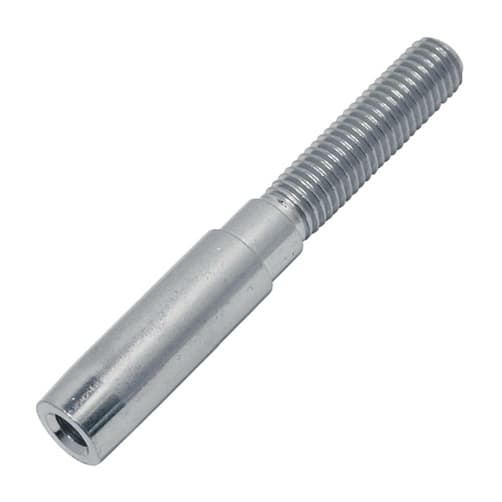 If you are still having trouble I would suggest using an express tap. Try purified lard oil and if it doesn't suit it can be used for cooking. The starter tap makes it easier to start the threads "square". Fingers crossed they work. I have successfully threaded the holes. That's nice for brass aluminum and plastics. Tapping 6-32 threads into it but i keep breaking taps. I used ridgid for most purposes, but "working a tap" not (over working it) usually produces the desired results . You really dont want to mess up a tapping job. The flutes job is to provide clearance so the chips can be kept clear of the cutting teeth and pushed out the top of the hole. if you need the hand sensitivity try one of these tee handles that are guided by the drill press spindle or lathe tail stock. It sounds like using a tap/drill chart is really important to make a good tap. Then use a proper set of taps - ie 1st and second taper and plug. They have the contacts to get special taps made to order if needed. These taps are used in blind holes less than 1.5 times the tap diameter deep with materials that produce short chips. I haven't had much luck finding actual hand taps in the US (the ones that have one ring then two and then the final one) The advantage is that each tap only cuts a portion of the thread which significantly reduces the chance of breaking one. You dont need a lot of lubrication, a little sliptivity goes a long way and will make the job easier. As you are in the UK, I was going to suggest using Trefolex as a cutting lubricant after you had drilled the hole one size larger than the charts suggest. One thing that is important when tapping difficult materials is getting the pilot hole the right diameter . I have seen aluminum break taps, its so soft it grips the tap and the metal chips get hung up and the tap just breaks. I havent built one yet. Even a .2 or .1 over will I think really help. It may not display this or other websites correctly. This additional hardness also makes them brittle, meaning, they can be easily broken, something you want to avoid at all costs. JavaScript is disabled. Burke #4 HM. The best way to do this is to turn the tap in the direction of cutting until you start to feel it bind. Your suggestion of a self tapper doesn't sound very good for 6mm plate if you want any strength. Breaking a tap off in a hole especially below the surface level will cause you untold frustration and possibly a number of colourful expletives! For steel's I go down to as low as 50% by using a tap drill that is one or two sizes larger than the size on the chart. Hand taps come in three basic configurations -Taper, Plug and Bottoming. Just tighten the chuck with enough force so the tap will work, but then spin in the chuck when it hits the bottom of a blind hole and not break. Back in 1916 when the association was formed, the term automotive was derived from Greek where auto means self and from the latin word motivus which means of motion. Use a tap lubricant specifically for stainless steel. Big Dave, former Millwright, Electrician, Environmental conditioning, and back yard Fixxit guy. Will this work? I'm doing this in a Bridgeport but we have one on a drill press that works great too. The cutting teeth on a tap are not continuous all the way around the tap body. BOTTOMING taps have no ground threads at the starting end and are generally used after, and in conjunction with a taper or plug tap. Caution: Wear protective ANSI approved safety glasses, working gloves and breathing mask at all times, Note: If there was an issues tapping, tap again with the next size and corresponding screw, Tip Sheet - Installing End Caps and Flush Angles. It happens, you just have to work with it. Economical tap and dies sets, while able to fill your current and future needs, might be false economy if the products are poorly made. A tapping head in a drill press will definitely help with that, and will lengthen the tool life on all of the taps you listed. by MikeG Tue Jun 07, 2005 4:55 pm, Post Soluble cutting oil is preferable, as being water based it has a greater cooling effect. how should i go about this? As the Society developed it came to incorporate the standards of the various other associations of self-powered vehicles, everything from tractors to aircraft. That drill chart is almost what I needed: now do you or can you supply a chart for drill sizes for heli-coil taps? I was looking for swarf not knowing what to call it. #3 will give you 57%. If you are buying taps specially, and don't mind the extra cost, go for high speed steel, (HSS) ground thread taps from an Engineers' Suppliers, rather than carbon steel from DIY outlets etc.. 300 series stainless steel is as soft as butter, the only problem with it is that it work hardens rather easily, such as by drilling with low loads and blunt drills. This chart is meant to provide general information. I used one of the broken HS taps and rounded it off a bit with my dremel. Be sure not to harden the stainless when drilling it. People are often unaware that there are four different series of standard twist drills. And never turn the tap more than 1/2 turn without backing off at least 1/4 turn. It's this magic green paste that just makes taps sharper, or material softer, I'm not sure which but it's definitely black magic. If it is a through hole, grab a spiral point 3 flute tap, or a heliflute for blind tapping. It is recommended to allow one thread length plus one mm beyond the lead of the tap as drill clearance.
We apologize for any inconvenience, the Drill Size Chart is now available for download. However, I don't have any and only use engine oil. Don't be tempted to open up a hole in stainless in very small stages. so sharp is rule for the day. So, I've had good luck with the msc brand accupro for powered tapping in the machine, and handtapping. Is there an industry standard for perpendicularity when hand tapping, or a suggested degree of angle for +/-. stainless is prone to work hardening so if you start with a work hardened hole from drilling your going to have trouble hole size is critical a few thou either way makes a difference so hole finish makes a difference . Stainless steel does not harden through heating, but due to very localised distortion of the metal caused by rubbing rather than cutting from the tool. In blind holes where there is not enough room to drill deep enough for a tap with a longer lead, taps with short leads are used. Use a spiral point (not spiral flute) tap, maybe called a gun tap in the catalog. Any advice is greatly appreciated. Use HSS taps in preference to carbon steel (Bog standard) and a good brand of cutting oil or grease made by Rocal. Internal threading is done by using a tool called a TAP in a hole drilled to a specific diameter for the thread size and pitch you want to cut. It's 3/16 304 stainless steel rod and i drilled it out with a 7/64 bit . we used them in high chrome tool steel like D-2. There's a 6mm stainless steel plate bolted over the top & I need to tap this. This rolling action displaces the metal of the blank, forming threads. True, also I found a very easy way to get small broken taps out is by hole punching it about 20 times. by Andre Tue Jun 07, 2005 1:00 pm, Post I am NOT an engineer, but have started a development project for medical devices in Ethiopia. Position handrail on saddles or handrail brackets, Mark your drilling points with a pen using the posts and saddles as a template, Remove saddles from post or handrail bracket (in the case it is removable), Center punch your marked drilling points; this will keep the drill bit from skidding, Apply cutting oil; drill the tube at your marked points using Cobalt drill bits. They work best in shallow depth through holes and in materials that produce short chips. They work much better in stainless steel, but perhaps a bit extravagant for a "one-off". It will give you all the threading information you need and includes an SAE-Metric-Decimal equivalent chart. Someone else mentioned using grease instead of oil. I didnt know that using too small of a hole could break your tap. Self-Reversing Manual Tapping Attachments, Visit OMG North America for Angle Heads, Spindle Speeders and Multi-Spindle Heads. I assume what you have is harder) but I won't tap stainless at all without "the green shit". Press question mark to learn the rest of the keyboard shortcuts. In order for taps and dies to cut, they must be harder than the materials they are cutting. Using a T-Handle keeps the force applied over the center of the tap or die, maintaining proper symmetry. Take your time, go slow, this is truly one of those situations where haste could indeed make waste of several hours of your time and possibly, your wallet. Have you tried to over drill for a lower percent thread. Using the correct hole size is important on two points. It stinks but for tapping stainless you have a hard time beating it. Now retired, persuing boats, trains, and broken relics. Metric thread pitches are expressed as the distance between threads, so a thread pitch of 1.0mm would mean it was 1.0mm between the tops of two adjacent threads. Drilling the hole a little bigger as the last poster suggested will also help. A lot of tapping problems come from the hole your tapping. According to these instructions you only make one pass at making the thread. Same with tapping, the normal advice of reversing to break the chip and going slow is the worse thing on stainless. Try making the engine in a different way !! It hardens and changes the quality of the metal, and if it throws the tap off line, BOING, yur dun! Fadal Turn, Fadal Vmc 15, Prototrak 16 x 30 Cnc Lathe, Pratt and Whitney 16 x 54 lathe, Pratt and Whitney Vertical Shaper, G & E 16" Shaper, B & O Electric turret lathe, 36" Doall band saw. The greater helix angle provides good transport of chips back out o the hole. The chips are curled up to prevent logging in the flutes. Tap Manufacturers offer their own unique geometries for specific materials and applications. by steamin10 Tue Jun 07, 2005 9:49 am, Post The latter two work, in a pinch, but you must be careful because turning the tap from one side only can put asymmetrical stress on the tap, causing it to go off center, or break. Try using a taper tap that has as long of a taper as possible. It makes sense youd be putting a lot of pressure on your materials. Well, here you go! Spiral Flutes With 3.5 to 5 Threads Chamfer Length. The vast majority of tap breakage can be avoided by making sure you break the chips, and the smaller the tap, the more important it is. Left Hand Spiral Fluted Tap
Afterwards I placed it in a drill press, with my piece placed in the vice. !Best oil for tapping stainless.. One picture is better than a thousand words. JavaScript is disabled. What would you recommend? For a better experience, please enable JavaScript in your browser before proceeding. Keith, From the land of Oz, although not the Wizard of. I believe your 420 grade is a precipitation hardening steel. The actual cutting of the thread is done by the lead of the tap. What stainless? I also found that it makes it easier to clean the thread a little more often i.e. by motorworks Tue Jun 07, 2005 6:13 pm, Post The oldest of these uses Imperial fractional measurement and is often referred to as SAE which stands for The Society Of Automotive Engineers. I've had a steep learning curve machining these parts so I'm already acquainted with the stuff work hardening but with a lot of trial and error the right cutting tools at the right speed with plenty of cooling fluid and it can machine quite well, it's just quite a small window and outside of it it's all smoke and noise and blunt bits. With 40 Degrees to 50 Degrees Spiral Flutes. The #2 tap is known as a "plug" tap. Relief Angle In The Lead Of A Tap
They worked OK even as hand taps but I would always use a drill press or lathe if possible. Fine pitch metric fasteners do exist and often come in more than one fine thread pitch some as many as 4 or 5! [For round tube only: you will need a self-centering drill press jig, Tap the tube using the hand-powered drill (at low speed) and the corresponding tap, Repeat steps 4-7 to all your marked points. Looks like Moly Dee is only available in the US, I'm in the UK. What 1/4-20 tap would you recommend for 1/4 thick stainless steel plate . The other, more recently adopted standard is known generally as metric but actually encompasses a number of different standards, from different countries. 1/2 turn in and 1 turn out will remove tap! Sure, you can buy a complete tap and die set, but do you really need it? Sorry o, if mistakenly the tap got broken, how can it be removed. Let's stay on the technical topic please folks. Oh, and coarse and fine threads are always different drill sizes. We will probably buy a taping head for the press drill . I have fixed the issue and it is available for download at your convenience. I'm going to buy a bigger drill. I went got a replacement , under warranty [img]/ubb/images/graemlins/wink.gif"%20alt="[/img] . They push the chips down and out the bottom so you don't stop and reverse - just keep going. Taps and dies come in various configurations and materials, the most common being High Speed Steel (HSS) for softer materials and Cobalt for hard materials like stainless steel. Special cutters combined with the motions of the machine generate very accurate threads rapidly . Threads produced using taps and dies, whether by hand or machine, are what is referred to as cut threads. I dont bother to hand tap stainless anymore, I use the drill press and vice, I use the feed lever to encourage starting STRAIGHT, and a pin in the chuck key holes to feed in, and reverse, STRAIGHT. The right drilling and cutting fluid is tepmatic or similar. Not a big fan of hand tapping with form taps. Not sure how widespread that usage is, but Ill go with it. Or can you use the tap like you are suppose to, recutting and cleaning the bent and damaged threads. 63% threads is a lot for stainless. I now only use this for tapping and parting off. The stainless type is 420. If the hole is too small, it will cause the tap to bind and quite possibly break trying to cut too much material. We are incorporating tap and die to Peek parts for manufacturing the neck of a Bag Valve Mask device. Fools talk because they have to say something. The threads found on most mass produced externally threaded products such as bolts, studs and screws, are formed by a process known as thread rolling. The speed of cutting is important because the hardening process is a chemical phase change. For each diameter of SAE threads, there are also two pitches, commonly referred to as UNC or Unified National Coarse (commonly called coarse thread) and UNF or Unified National Fine (fine thread). That's the Moly Dee tapping oil you're talking about? If you start at an angle you will not be able to complete threading, and the tap will break. I have 15 years of device industry experience in the US as Director of Clinical / Regulatory. A #6-32 tap is very weak because the coarse thread leaves such a small root diameter. We create product assembly, manufacturing, and s 2022 Inline Design by Keith Tue Jun 07, 2005 11:37 pm, Post http://www.guhring.com/documents/Tech/Charts/CutTapDrill.pdf, reliability of electronics in cnc conversions. Being in a similar situation of failing to tap S/S small threads I was advised by my local tooling specialist to use "RELTON 04Z-NRT Rapid Tap Cutting and Drilling Fluid" and drill out 0.1 mm larger holes. How often do you get something useful for free? Usually they are only 55-60% for stainless. Straight Fluted Taps With Spiral Point
They can also be used in deeper holes up to 3 times the tap diameter. I need to fit a cable gland to the top of my mast. Redesign the part for a #6-40 thread. Oftentimes its better to just buy the taps you need or use on a regular basis, pay a little more, and get a better, more reliable tool. almost impossible when tapping by hand with a tee handle ! I need to know what is the strongest most reliable tap for threading 6-32 into stainless steel. In some materials, if you back off torque momentarily you may hit a hardening wall. This greatly increases torque and reduces tap life. These taps push the chips forward. Generous lube. Went down to Acklands-Grainger and picked up a good quality tap and took my time got about halfway down ( total depth 3/4") and it broke.They were all 3 flute bottoming taps. How To Tension A Cable Railing System Using A Tension Meter Tool? Sometimes, the hole size you need is not a standard fractional size. by Doug_C Tue Jun 07, 2005 9:20 am, Post Wise people talk because they have something to say. The relief angle effects true to gage thread cutting, and also the free cutting ability and life of the tap. Express taps do not cut but form the thread. It is not a black art, it is a science. Harder materials like stainless steel can be cut easier with a tap having a greater relief angle which reduces the friction. Thanks for the advice, I went ahead and ordered some 2 flute spiral taps. password. More reliable, harder taps are made from High Speed Steel. All Installations of products offered by Inline Design must comply with local and national Large orders and projects typically require some custom production. by Victor_R Tue Jun 07, 2005 5:44 pm, Post it is essential that you use a cutting fluid. This is great information! TAPER taps have the first 7 10 threads at the tip ground flatter than the main body of the tap to enable easy starting of the threads in the hole. The handrail and handrail brackets will provide the necessary support for the posts while the cable is being installed. They are used for through holes. At this point, turn the tap slowly in reverse until you hear, or feel a click of the chip breaking away from the material being cut. Ghuring taps also hold up, but I have the accupro red band 1/4x20 that I full send through titanium 1" deep and its done 400ish parts so far. I'm thinking Inconel for example. Also could you use a #3 instead of a #4 drill? These taps are used only in blind holes in materials that produce long chips. Stainless has always been a problem for me to tap, as its working qualities make it gummy to start with and then work harden to trap a tap. A Reddit for Machinists of all varieties. Form taps displace material, don't you need to remove it with a cutting tap first? The way Im reading your instructions there doesnt seem to be instructions on the reason why you have the centre screw on the die holder screwed in for the first cut of making a thread, then to adjust the screw to make the thread deeper ( if required). These taps do not transport the chips out of the hole. Cut threads are generally of better quality and closer tolerance which is why a die nut run on the threads of a brand new fastener might still remove some material, and/or plating. I also second this, but only if the machine is doing the work. A site dedicated to enthusiasts of all skill levels and disciplines of the metalworking hobby. 17-4/15-5 is vastly different than 304. You can use a a specialty tapping fluid, a light machine oil, a little WD-40, even a shot of PAM will work. Also if you know any taps for stainless on eBay (preferably in US) please do put the link I really need to get this right. The SAE standard thread pitches are measured in TPI or threads per inch. Yep, what Victor said. tryed it again with some tapping fluid very slowly , snapped again . NOTE: For cable systems, handrails must be installed before your cable. I'm on the other side of the planet and I buy unusual taps from Victor Machinery Exchange in Woodside, New York, USA. A small relief angle can be used in soft materials. Hence the need for sharp tools, low speed,and heavy pressure, (high feed), on the drill. In several hundred holes I only ever broke an M3 one when I got distracted. This requires tapping and drilling the handrail and then attaching the handrail bracket to the handrail. Harig 612 SG. Thanks. Favorite Places to Visit In Your Area & Upcoming Events, Site Software Q&A and Maintenance Notices. If you work harden the SS while drilling, you can forget cutting thread. Seal Oil! And never turn the tap more than 1/2 turn without backing off at least 1/4 turn. JavaScript is disabled. The drill charts are calculated at 70-75% thread engagement. (8-10 threads) That way the first threads will be done cutting by the time the final threads start cutting to reduce the torque. Other than that any decent quality tap will work. In other words, any form of self-powered vehicle. Thank you for sharing. If you've already drilled the holes, then sorry for this useless advice, but I've found that improper drilling will make hard spots in stainless that break taps. Stainless Steel Railing: Is It Easy to Clean and Maintain? In North America, and Canada in particular, there are two main thread series in use. On another note, is there any materials out there that you can't tap with anything? Another way to connect the handrail bracket to the post, is by welding. You can power tap an M4 thread with these. Different stainless steels work harden differently. A tapping set up that does not side load the tap by twisting unevenly ! by kapullen Tue Jun 07, 2005 8:45 am, Post Thx, greatt writeup covering all the bases and explaining them in plain language for all to understand. Nice, thanks for the ultra fast response. Some manufacturers apply platings or coatings designed to increase the cutting ability and life of their products, beneath that, it is usually one of the two materials for most applications. Installation Instructions: 1/2 turm clockwise followed by full turn or turn and half backwards gets rid of swarf . the download link to the drill size chart is not working. Drill hole square and tap square. Post They direct the shavings out of the hole unlike straight flute that just fill the flutes and bind. If you can only buy one type of tap, and youre a patient user, plug taps can be a good choice because they are still easy to start, but they can also form complete threads deeper into a blind hole than a taper tap. Hand threading dies are generally of two types. If you continuously turn the tap the chips will be hardened but the material being cut will be fresh and normal hardness. Whether youre repairing a damaged thread or threading virgin material, there are a number of factors to consider and procedures to follow to produce the best job, with the least amount of wear and tear and breakage, on your tooling. Could you explain the material hardening? 2022 Physics Forums, All Rights Reserved, http://www.bssa.org.uk/topics.php?article=192, http://m.ebay.com/itm/Qty-3-New-Gren-Plug-Taps-/171887965628?txnId=1538252098007, http://www.victornet.com/departments/TAPS/100.html, http://www.northerntool.com/shop/tools/product_200624059_200624059, https://en.wikipedia.org/wiki/Precipitation_hardening, http://www.outokumpu.com/en/productnd-precipitation-hardening/Pages/default.aspx, http://www.outokumpu.com/en/productining-cutting-and-grinding/Pages/default.aspx, https://en.wikipedia.org/wiki/Hardened_steel, http://www.azom.com/article.aspx?ArticleID=1141, http://www.spiusa.com/stainlesssteel_overview.php, Effect of a lightning strike on stainless steel bolt, Questions about energy generation from coal, Heat Flow in a Pipe with integrated Sensor, Help with thrust and HP needed to hover 300 pounds at 30' off the ground, Looking for waterproof alternatives to OSB for subfloors, In Search of: Cheap/common pressure switch. Pushes the chips down the hole, very tough, generous lead. Even when using taps with shortened lead it is still important to drill deep enough for adequate clearance. Both taps and dies can be used to either cut new threads or repair damaged threads. The spiral flutes transport chips back out of the hole. Spiral Flutes With 3.5 to 5 Threads Chamfer Length. Topics include, Machine Tools & Tooling, Precision Measuring, Materials and their Properties, Electrical discussions related to machine tools, setups, fixtures and jigs and other general discussion related to amateur machining. by Doug_C Tue Jun 07, 2005 2:19 am, Post You didnt say how you are work holding here, so I'll guess, and maybe help anyway. We've got this stuff I call "the green shit". I'm making a pump rod that screws to the end of a pneumatic ram, for a paintball marker. I used to use spiral flute machine taps on various stainless steels, all about 30 HRc hardness. We all know about fractional and metric sizes, but with twist drills there are also Number and Letter drills. With 6 to 8 Threads Chamfer Length or Lead. If you are still having trouble I would suggest using an express tap. Try purified lard oil and if it doesn't suit it can be used for cooking. The starter tap makes it easier to start the threads "square". Fingers crossed they work. I have successfully threaded the holes. That's nice for brass aluminum and plastics. Tapping 6-32 threads into it but i keep breaking taps. I used ridgid for most purposes, but "working a tap" not (over working it) usually produces the desired results . You really dont want to mess up a tapping job. The flutes job is to provide clearance so the chips can be kept clear of the cutting teeth and pushed out the top of the hole. if you need the hand sensitivity try one of these tee handles that are guided by the drill press spindle or lathe tail stock. It sounds like using a tap/drill chart is really important to make a good tap. Then use a proper set of taps - ie 1st and second taper and plug. They have the contacts to get special taps made to order if needed. These taps are used in blind holes less than 1.5 times the tap diameter deep with materials that produce short chips. I haven't had much luck finding actual hand taps in the US (the ones that have one ring then two and then the final one) The advantage is that each tap only cuts a portion of the thread which significantly reduces the chance of breaking one. You dont need a lot of lubrication, a little sliptivity goes a long way and will make the job easier. As you are in the UK, I was going to suggest using Trefolex as a cutting lubricant after you had drilled the hole one size larger than the charts suggest. One thing that is important when tapping difficult materials is getting the pilot hole the right diameter . I have seen aluminum break taps, its so soft it grips the tap and the metal chips get hung up and the tap just breaks. I havent built one yet. Even a .2 or .1 over will I think really help. It may not display this or other websites correctly. This additional hardness also makes them brittle, meaning, they can be easily broken, something you want to avoid at all costs. JavaScript is disabled. Burke #4 HM. The best way to do this is to turn the tap in the direction of cutting until you start to feel it bind. Your suggestion of a self tapper doesn't sound very good for 6mm plate if you want any strength. Breaking a tap off in a hole especially below the surface level will cause you untold frustration and possibly a number of colourful expletives! For steel's I go down to as low as 50% by using a tap drill that is one or two sizes larger than the size on the chart. Hand taps come in three basic configurations -Taper, Plug and Bottoming. Just tighten the chuck with enough force so the tap will work, but then spin in the chuck when it hits the bottom of a blind hole and not break. Back in 1916 when the association was formed, the term automotive was derived from Greek where auto means self and from the latin word motivus which means of motion. Use a tap lubricant specifically for stainless steel. Big Dave, former Millwright, Electrician, Environmental conditioning, and back yard Fixxit guy. Will this work? I'm doing this in a Bridgeport but we have one on a drill press that works great too. The cutting teeth on a tap are not continuous all the way around the tap body. BOTTOMING taps have no ground threads at the starting end and are generally used after, and in conjunction with a taper or plug tap. Caution: Wear protective ANSI approved safety glasses, working gloves and breathing mask at all times, Note: If there was an issues tapping, tap again with the next size and corresponding screw, Tip Sheet - Installing End Caps and Flush Angles. It happens, you just have to work with it. Economical tap and dies sets, while able to fill your current and future needs, might be false economy if the products are poorly made. A tapping head in a drill press will definitely help with that, and will lengthen the tool life on all of the taps you listed. by MikeG Tue Jun 07, 2005 4:55 pm, Post Soluble cutting oil is preferable, as being water based it has a greater cooling effect. how should i go about this? As the Society developed it came to incorporate the standards of the various other associations of self-powered vehicles, everything from tractors to aircraft. That drill chart is almost what I needed: now do you or can you supply a chart for drill sizes for heli-coil taps? I was looking for swarf not knowing what to call it. #3 will give you 57%. If you are buying taps specially, and don't mind the extra cost, go for high speed steel, (HSS) ground thread taps from an Engineers' Suppliers, rather than carbon steel from DIY outlets etc.. 300 series stainless steel is as soft as butter, the only problem with it is that it work hardens rather easily, such as by drilling with low loads and blunt drills. This chart is meant to provide general information. I used one of the broken HS taps and rounded it off a bit with my dremel. Be sure not to harden the stainless when drilling it. People are often unaware that there are four different series of standard twist drills. And never turn the tap more than 1/2 turn without backing off at least 1/4 turn. It's this magic green paste that just makes taps sharper, or material softer, I'm not sure which but it's definitely black magic. If it is a through hole, grab a spiral point 3 flute tap, or a heliflute for blind tapping. It is recommended to allow one thread length plus one mm beyond the lead of the tap as drill clearance.